This beginners recipe is for those of us making our own pizza dough for the first time at home. It’s a 48-hour (approx) rise recipe i.e. you mix the dough 2 nights before you intend to cook. (If you want to mix it now and eat in a few hours you can add more yeast but it won’t taste as good and might leave you feeling heavy.) If you want to make it quicker within a few hours then all you need to do is increase the quantity of yeast, the more yeast the quicker it will rise.
There are six essential ingredients of pizza dough; Flour, Water, Salt and Yeast. The last two ingredients are curiosity and patience, these are essential attitudes for learning to make pizza from scratch because it will take time to learn the methods and techniques. Often I have seen it takes quite a few tries to get the techniques. It’s like learning to ride a bike or drive a car, once you know how to do it, it will be almost impossible to unlearn it.
First of all let’s gather the equipment
The bare essentials are;
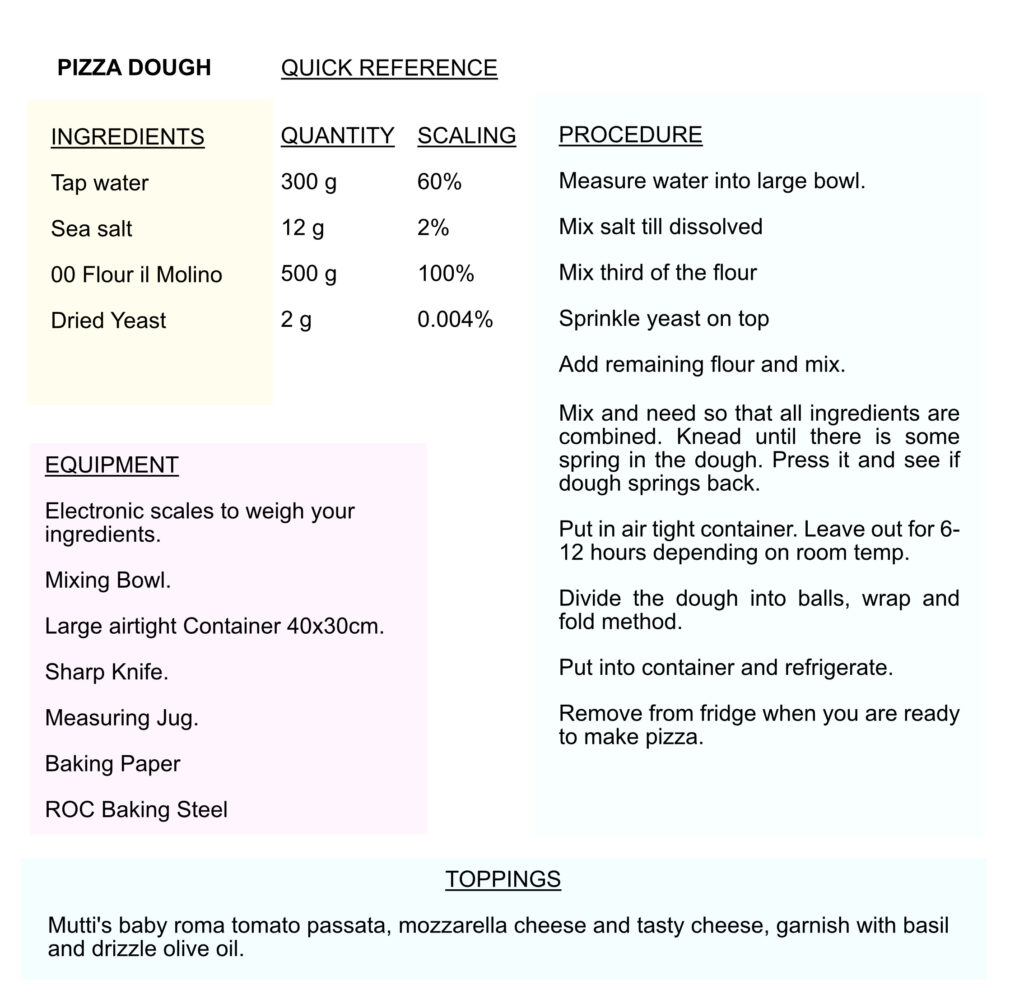
- Electronic scales to weigh your ingredients.
- Mixing Bowl.
- Large airtight Container 40x30cm.
- Sharp Knife.
- Measuring Jug.
- Baking Paper
- ROC Baking Steel
Next we gather the ingredients
This will make 6 large pizzas or 8 medium-large pizzas. If you want less pizza then you can just half the ingredients quantity. (with the yeast it’s hard to only do 1gram with most digital kitchen scales so if it is 2 grams it will be close enough)
The ingredients we need for the dough are
1kg of Pizza/Bread Flour
24 grams of Salt
1-1.5 grams dried yeast or 3 grams fresh yeast. (If you want to a quickly rise your dough you can speed it up by using more yeast 5 to 7 grams will do the job)
600 grams (mls) of water
(An example of halving the ingredients would be 500grams flour, 300grams water, 12grams salt, .5-.75 gram yeast.)
Toppings, use a pre made passata (or San Manzano Tomatoes reduced on stove), mozzarella etc
Flour
For the flour we will use a bread or pizza/pasta style flour. To get started you can buy something like a lighthouse brand or an Italian imported 00 flour. Regular plain flour won’t work as well for pizza/bread because the protein quantity and type is not the same. Bread flour is generally a classification of wheat harvested at a particular time of the year. If you want a deep dive guide on the properties of wheat check out Jeffrey Hamelman‘s ‘Bread : A Baker’s Book of Techniques and Recipes’.
Water
Regular town tap water will work just fine for pizza in most parts of Australia.
Salt
Salt, the type of salt makes a difference to the flavour, some are saltier than others and have a different effect. But for purpose of beginning your regular table salt or sea salt will do well.
Yeast
Buy a commercially made yeast when you are starting out, I just tried a new Lighthouse yeast which also has Vitamin C (ascorbic acid) mixed in and will greatly help your dough rise and capture the air.
Yeast can be dried or fresh. Generally most supermarkets only stock the dry yeast. And delicatessens and Wood-fired Pizza shops will be able to supply you fresh yeast. Later on you can make your own yeast starter.
Let’s mix it up (Time required: 15mins, 5 mins clean Up)
Wednesday night (or two nights before) take your large mixing bowl put it on your scales, zero your scales, add 600 grams (mls) of tap water, add 24 grams of salt. Stir the salt until it has dissolved. Start adding the flour, add about 300 grams of flour and stir the mix. Before adding more flour we are going to add approx 1.5 grams of yeast, sprinkle it in. Then start adding the remainder of the flour. Keep mixing until all the flour from edges and sides has been absorbed.
Your hands might get sticky with dough, keep mixing for 10 minutes. Add a small amount of flour if too sticky (sticky is alright). After kneading the dough will feel slightly elastic. Put it in your airtight container with lid to sit two nights in fridge.
Friday morning (10mins)
In the morning divide the dough into even portions (200-250grams each depending on the size you want your pizzas), you should see that your dough has slightly increased in size and there will be small air pockets when you cut it. Make the portions into small balls using a fold and tuck method, place them back in your airtight container. If colde weather, leve them out the fridge. If warm weather put them back in fridge and and take out a couple of hours before you want to make your pizza.
I’m making pizza tonight!
At least 45mins before you want to cook, turn on your oven and place you ROC Baking Steel in the oven to preheat, use the pizza setting or fan forced setting on your oven. Crank the oven all the way up. You can put the steel on one of the shelves just above the middle.
Flatten your dough into a round shape starting from the middle. Don’t use a rolling pin, just slowly stretch and push it into shape with your hands so that you don’t loose all the air bubbles from the dough.
Add your toppings.
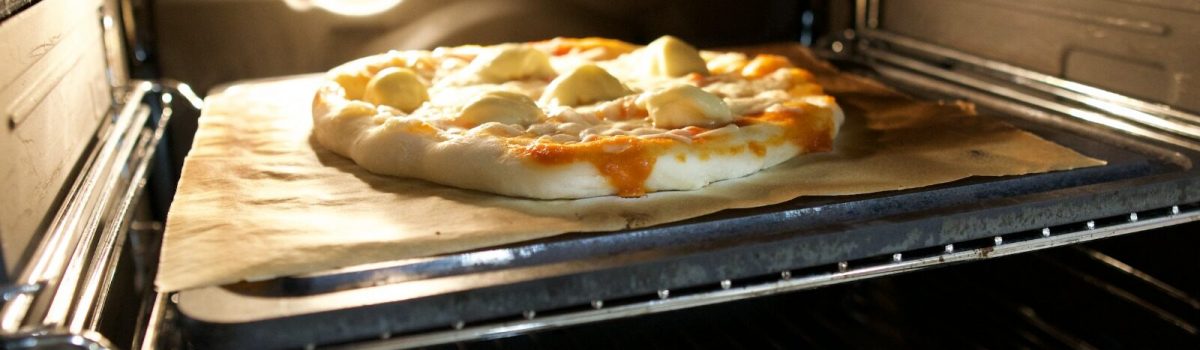
As a beginner I like to use baking paper, I oil the paper and both sides of the dough. I leave my dough on the baking paper whilst adding my toppings. I slide the pizza and baking paper onto a chopping board and then slide the pizza with the paper into the preheated oven.
How long to cook it
While cooking you can watch to see how your pizza is going, and use a spatula to turn it if one side is getting more cooked than the other. Use a spatula to slide the pizza onto your chopping board or pull the pizza with the paper. Watch out for hot surfaces!
Leave to rest for a few minutes and serve.
Once you’ve started on the pizza making journey then you can experiment and try some new methods to create subtle differences in your dough. Have a look around online for other pizza making resources as there are plenty out there. One that I recommend is Sourdough Baking Australia Facebook Group. If you have netflix check out Cooked, the air episode where they talk about the importance of air bubbles in dough for flavour.
This is a quick introduction so please let me know if you have any questions.
Peter
Founder of ROC Baking Steel